
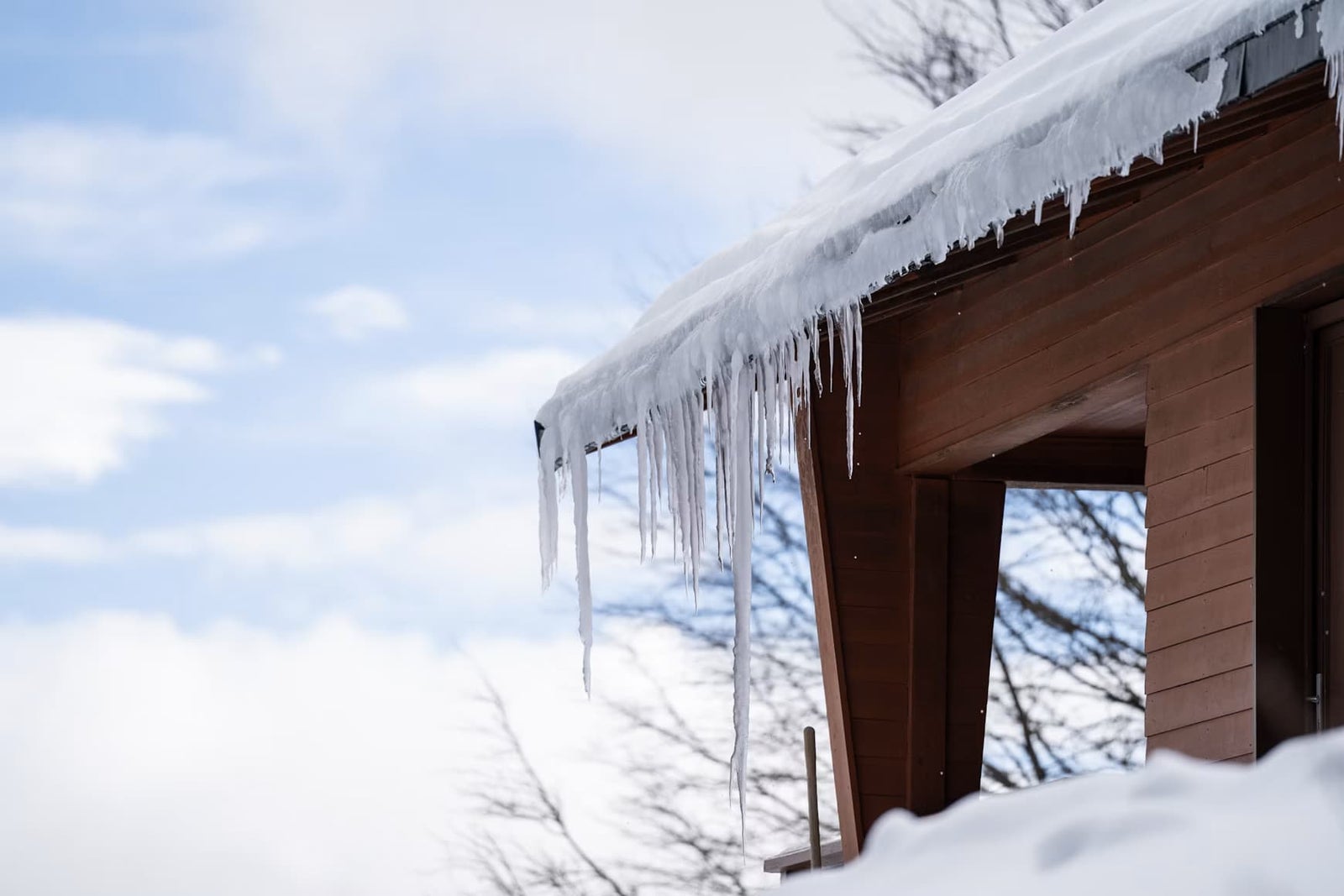
Icicle Buildup On Roofs If you only pay attention to your home when something actively breaks, you're catching the problem way too late.
Introduction
Here's how to read the warning signs before they turn into major repairs. Welcome to our new series, "What Is Your Home Trying to Tell You", a series on the small signs your home gives off, what they mean, and preventative tips!
Those big icicles sure are pretty, BUT they're also one of the clearest warning signs your home gives you all winter, and most people miss it. This is what's happening: heat is escaping from inside your home, up into the attic (often through gaps around light fixtures, attic hatches, or bathroom fans, or just from insulation that's thinner than it should be). That warm air heats the underside of your roof, which melts the snow sitting on it. The melted water then runs down towards the eaves, where the roof is colder, it refreezes because it overhangs the heated part of the house.
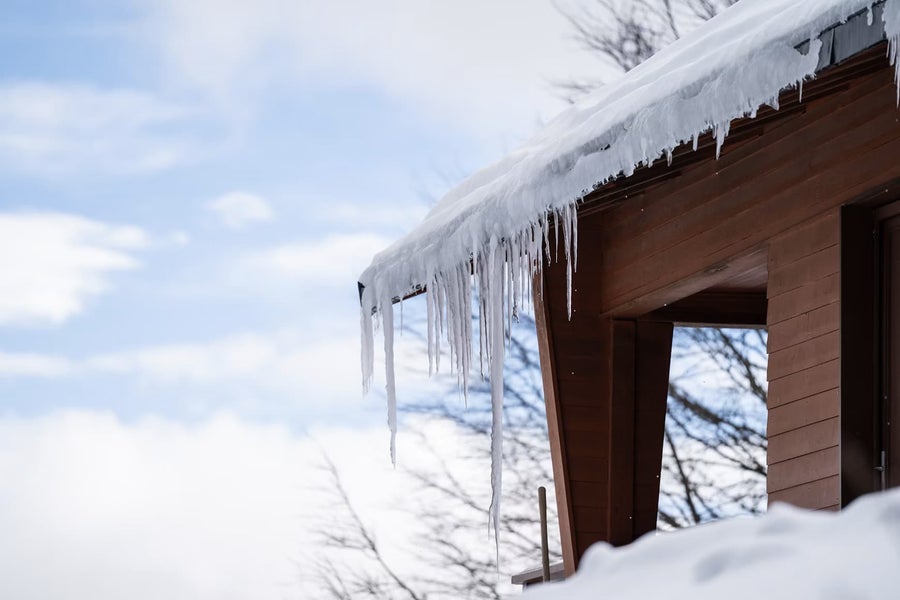
 This cycle repeats enough times until it forms an ice dam: a ridge of ice at the edge of your roof that traps more melted water behind it. It doesn't stop there. That trapped water can back up under your shingles and sneak its way into your attic, your insulation, and eventually your ceiling. By the time you see a water stain indoors, the damage has usually been building for a while. In Northern Ontario's brutal sub-zero winters, any thin spot in your insulation lets indoor heat shoot straight into the attic, turning a patch of your roof into a miniature heater that melts snow all day and freezes it into ice dams at night.
Ways to stay proactive:
Each fall, before the first heavy snow fall, take a quick look at the insulation in your attic, and take another quick peak mid-winter during a cold spell. Good attic insulation should look like a smooth, fluffy duvet covering the entire floor space evenly, not an uneven landscape of high mounds and low valleys.
Warm, humid indoor air naturally rises into the attic around pot lights, electrical boxes, bathroom exhaust fans, and the edges of the attic access hatch itself. Make sure to check these cutouts for gaps or degraded weatherstripping. When air leaks aren't sealed, the warm air leaks through and creates a localized warm spot on the roof. This is why you will often see heavy icicle formation concentrated above one specific room or section of your eaves.
Lastly, your attic needs constant airflow to keep cold air moving in at the bottom and warm air pushing out at the top. This relies on soffit vents drawing cold air in, and ridge or gable vents lending lingering heat escape. On a bright day, pop your head into the attic with the lights off and look toward the outer edges. You should see light shining through the soffit vents. If it's pitch black, loose insulation or debris has blocked your intake airflow.
What NOT to do:
NEVER climb onto an icy roof to chip away at ice dams with a shovel, hammer, or ax. It's extremely dangerous, and it's remarkably easy to puncture your shingles.
What To do Instead:
If you're seeing heavy icicle buildup or ice dams forming, call a qualified roofing or insulation professional. They can safely evaluate your attic space from the inside out to pinpoint whether you're dealing with an insulation gap, a ventilation bottleneck, or a mix of both.
Stay tuned for Part 2 of What Is Your Home Trying to Tell You, where we decode what damp window corners are actually trying to say.